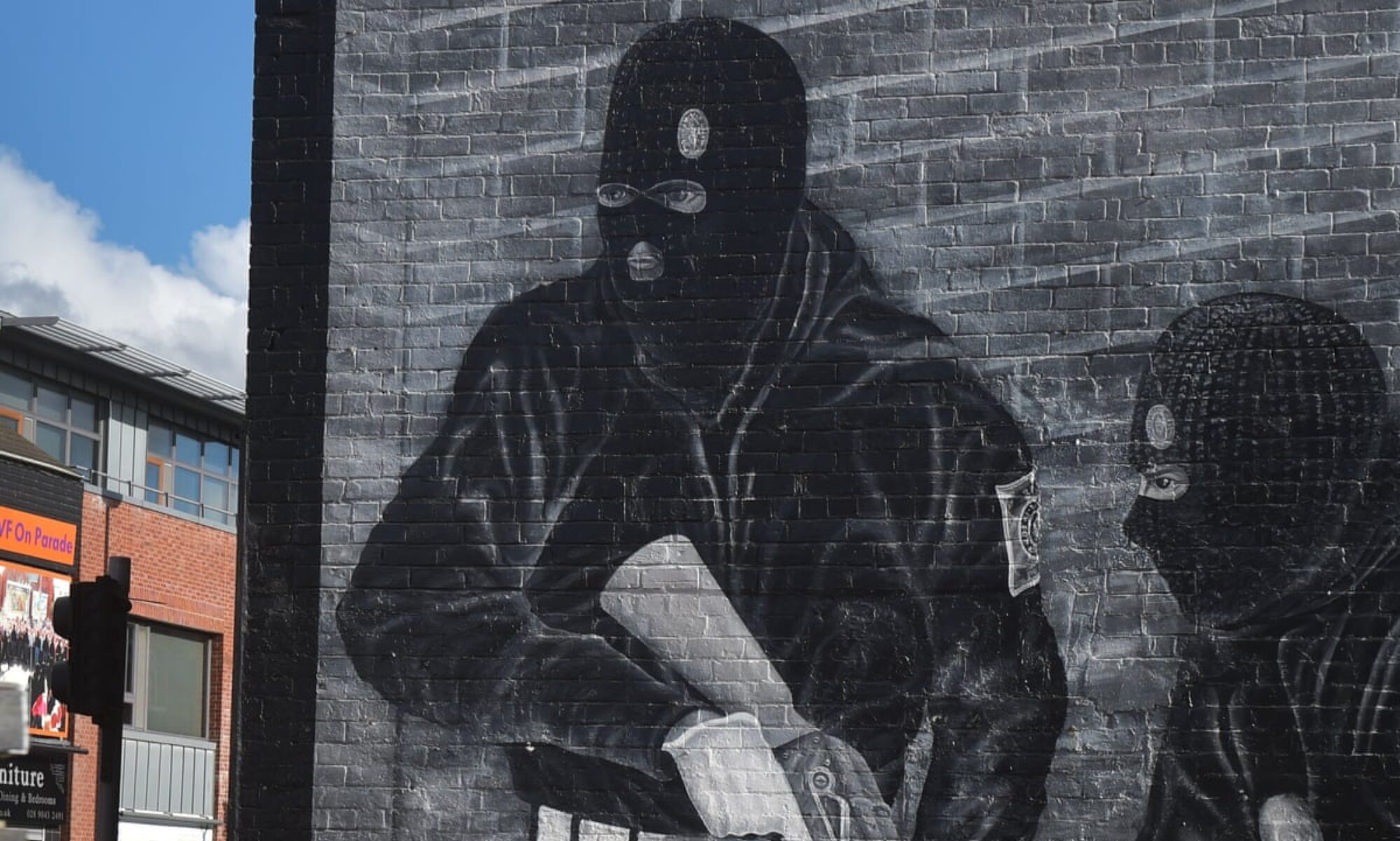
Northern Ireland has an extensive and turbulent history of tribunal parties pervading its electoral system. On one end of the spectrum, the main two nationalist parties: the Social Democratic Labour Party (SDLP) and Sinn Féin battle for the vote of the nationalist, and largely Catholic population. On the other side, the two largest unionist parties: the Ulster Unionist Party (UUP) and the Democratic Unionist Party (DUP) compete for the vote share of the unionist, Protestant population (Dunn 1995). Across the nationalist political landscape as a whole, the SDLP represents a much more moderate voting base as opposed to its more extreme rival, Sinn Féin.
Initially, Sinn Féin expressed little interest in electoral pursuits, and still to this day, maintains an abstentionist policy towards the Westminster Parliament (M. Whiting 2016). Consequently, there was minimal electoral competition between SDLP and Sinn Féin– at least until the 1980s.
In 1981, Sinn Féin experienced its “first meaningful republican contact with elections” (M. Whiting 2016, p. 295). As the hunger strikes raged on among the interned prisoners in Northern Ireland, Sinn Féin put forth hunger striker, Bobby Sands, as an electoral candidate. Sands’ subsequent win was symbolic of the party’s initial step toward their “armalite and ballot box” strategy (M. Whiting 2016). Sinn Féin’s active participation in elections contradicted one of its founding principles: the rejection of legitimacy of Northern Ireland’s government as separate from the Republic of Ireland (M. Whiting 2016). However, it is the gradual abandonment of such radical tenets that have propelled Sinn Féin to the forefront of Republican electoral success.
As Sinn Féin progressively asserted itself as a formidable contender in Stormont elections, it posed a genuine challenge to the SDLP’s historically firm grip on the nationalist vote. Since 1981, Sinn Féin’s vote share has consistently grown, culminating in its surpassing of the SDLP in 2001 (CAIN 2023). Presently, Sinn Féin stands as the largest party in Northern Ireland (Tonge 2022).
Sinn Féin’s electoral success can be attributed in part to alterations in its strategy. By distancing itself from past violence, particularly its association with the Irish Republican Army (IRA), Sinn Féin has garnered increased support and political prominence. Additionally, Sinn Féin’s growing success came partially as a result of mobilizing previous non-voters and new voters. Simultaneously, by criticizing the SDLP for being too sympathetic to the British and thereby out of touch with the nationalist community, Sinn Féin has siphoned votes away from its more moderate rival.
As evidenced by its status as the largest party in Northern Ireland, Sinn Féin has effectively become the nationalist party best representing its community. The party’s growth, from being entirely abstentionist to an essential part of the government, was complicated by its own radical messaging which it had to manipulate in order to be more palatable to voters. The SDLP frequently had to pay the price for Sinn Féin’s victories despite the former’s continued well-intentioned and diplomatic successes (McGlinchey 2019). The SDLP’s gradual fall appears idiosyncratic due to its historic prominence, but Sinn Féin’s strategic moves especially since the 1980s form a coherent narrative explaining its ascent to become the most influential political party.
