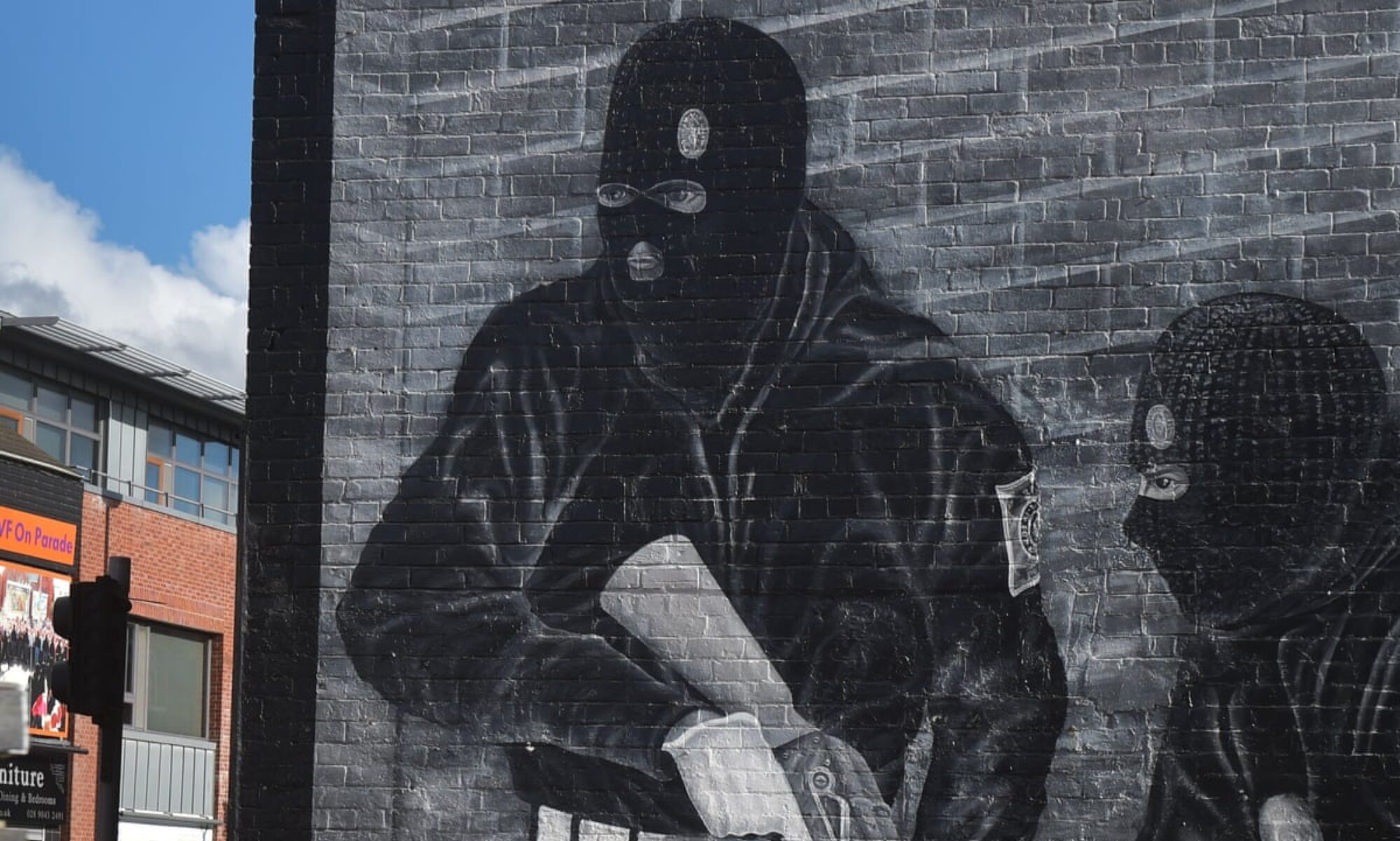
Artifact 1: Ballyseedy Monument Memorializing Anti-Treaty Insurgents
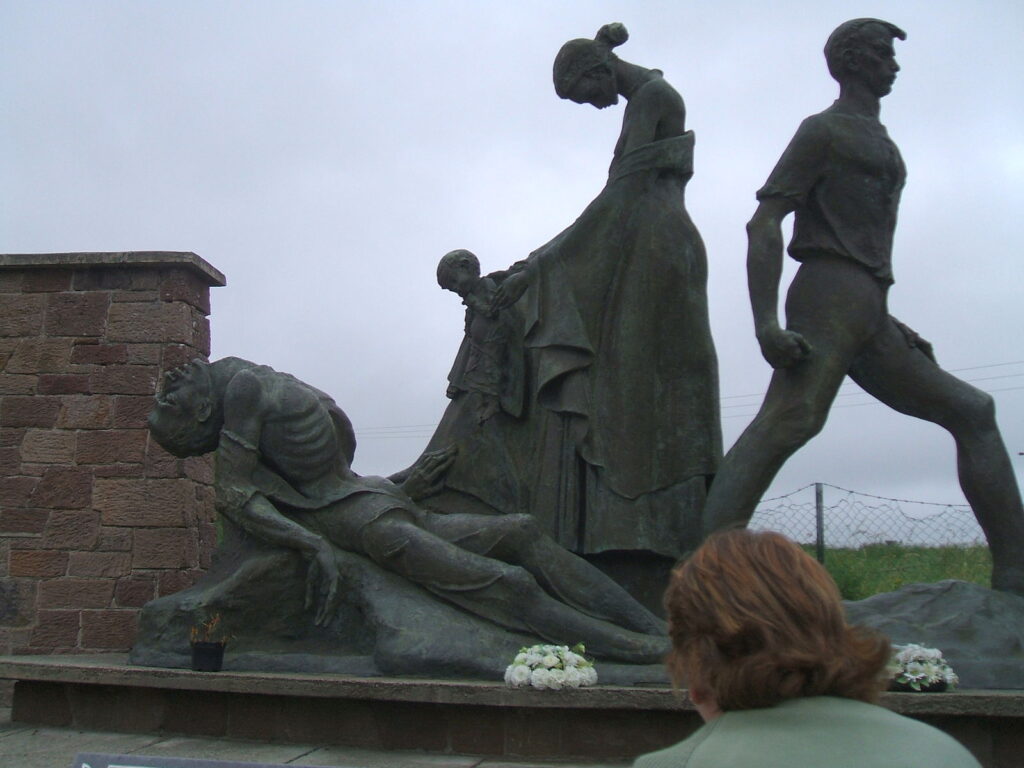
Monument in Ballyseedy, Ireland dedicated to the eight Anti-Treaty IRA Prisoners executed by Free State Forces there in 1923. Sculpted by Yann Goulet in 1959 (O’Connor, 2023).
The first artifact in this collection is a memorial in Ballyseedy, Ireland depicting insurgents opposing the 1921 partition treaty which created the border between Northern Ireland and the other 26 counties. The exposed ribs of the malnourished insurgent on the ground references the Irish Potato Famine, as well as the overall oppression and degradation of the Irish people by the British Empire. Notably, the sculptor Yann Goulet places the only woman in the piece in a position of submission— mourning the fallen male revolutionary, caring for her child, and being protected by another intrepid man. Her and her child face away from the violence that is assumed directly outside of the view of the sculpture. Intentionally or not, the memorial demonstrates the subjugated position of women in many extremist Republican circles as one to provide and care for current and future soldiers.
Additionally, the importance of historical trauma as a motivating factor for Nationalism is demonstrated through the monument’s existence and topic material. Ballyseedy was the site of one of the worst atrocities following the Irish War of Independence, in which eight anti-Treaty “Irregulars” were executed by Free State Forces in March of 1923. The child staring at what is presumably a relative perishing at the hands of British soldiers exemplifies the historical grievances that all dissident Republican movements cling on to and seek to represent moral and violent opposition to.
In our final class discussion with Andrew Elliot, a member of the Northern Ireland Civil Service Bureau, he described the importance of history and framing in the context of the Troubles. “If you ask Unionists, history starts around 1969 with the introduction of an organization called the IRA. If you ask Republicans, it starts around partition, or earlier” (Andrew Elliot, Brexit and the Future of Northern Ireland, May 31st, 2023). The ability to claim the long history of martyrs and principled rebellion is a consistent sticking point between the different variations of the IRA, a theme which will be explored further in the following artifacts.
