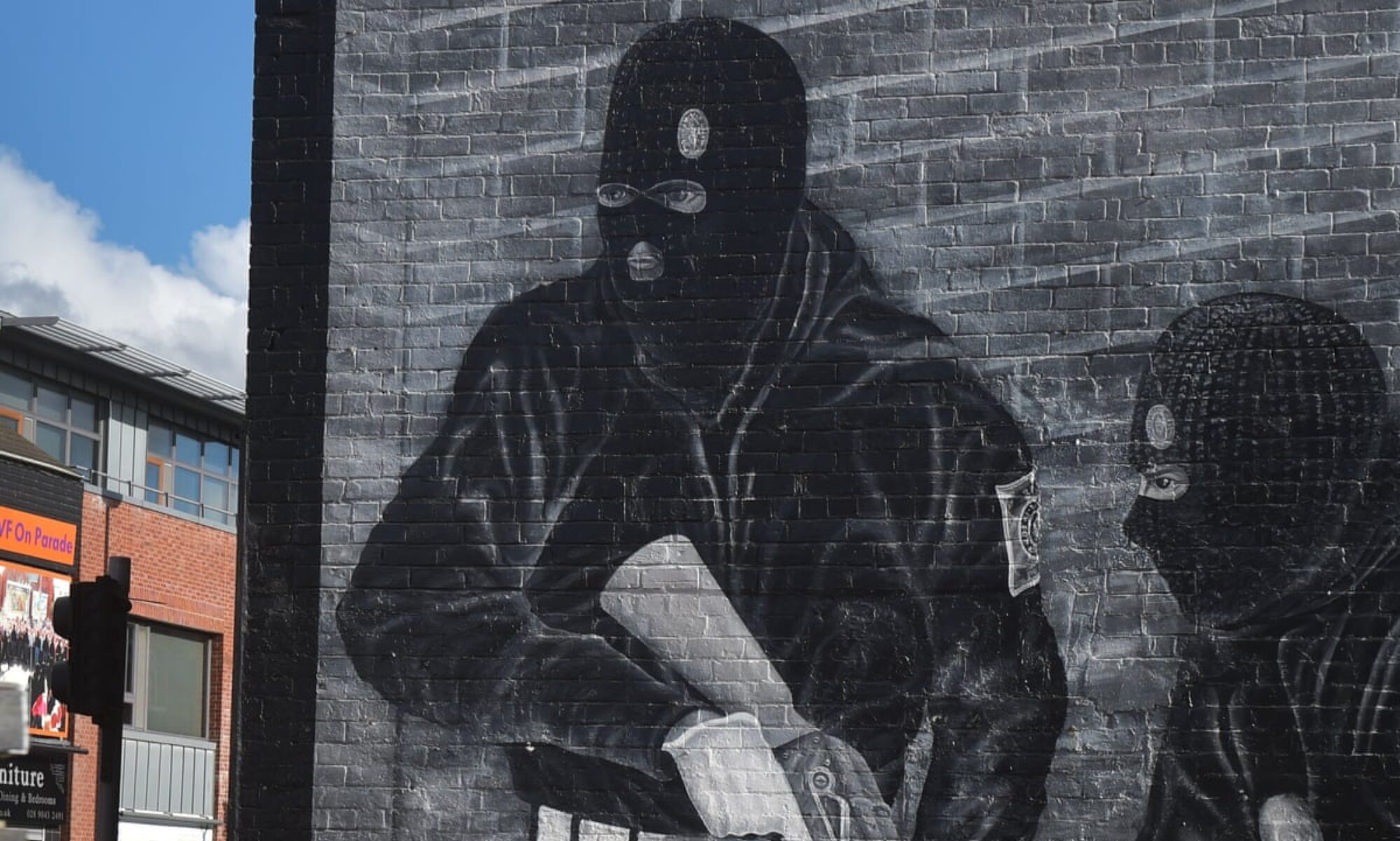
Artifact 8: Real IRA Mural in the Bogside Neighborhood of (London)derry
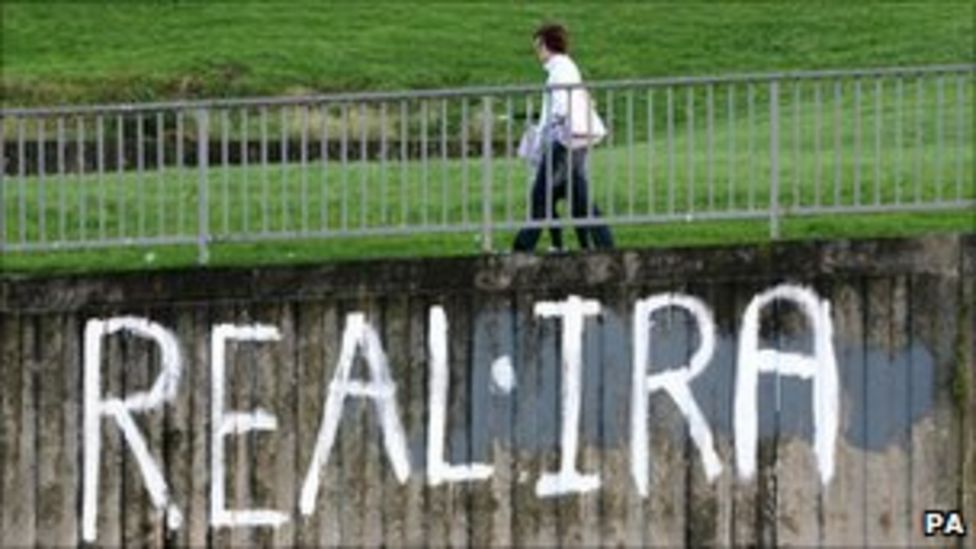
Graffiti in Bogside, (London)derry, Northern Ireland expressing support for the Real IRA (BBC News).
The final artifact in this exhibit is graffiti expressing solidarity with the Real IRA in the Bogside area of (London)derry. The neighborhood is overwhelmingly Catholic, but borders majority Protestant areas of the city, and was the site of the 1969 Battle of the Bogside between Republican protestors and the RUC. Despite an overall decrease in extremist Republicanism following the Good Friday Agreement, holdouts and new recruits continue to feed holdout groups. Reinisch (2020) explains that due to a ignorance of the reality of the Troubles and an allure through social media, extremist Republicans have been able to reach a new generation of potential volunteers, especially in the Republic.
However, a world in which Brexit and demographic shifts have made a referendum for reunification a question of when, not if, is one that is not particularly conducive to Republican extremism. During our class discussion with hunger striker and former IRA member Laurence McKeown, he expressed supreme confidence for the short and long-term prospects of Nationalism. As a result, he described the Unionist cause as one relegated to just slowing down the inevitable. He also argued that Sinn Fein’s strategy has become less concerned with working with unionists and more concerned with preparing for reunification (Laurence McKeown, Hunger Strikes and Republicanism, April 21st, 2023). The most critical preparation in that case would arguing be the subduing of the radical violent wings of the Republican movement; their presence serves as the only potential stumbling block that would dissuade support for Nationalism as a whole. Whether or not Irish Republicanism can remain unified, or as much as they are able to be, will determine the future of Northern Ireland and the security and peace of a reunification process.
