Image #3: Gilles Peress (French) As the shooting stops on Bloody Sunday a victim lies dead, Derry, 1972
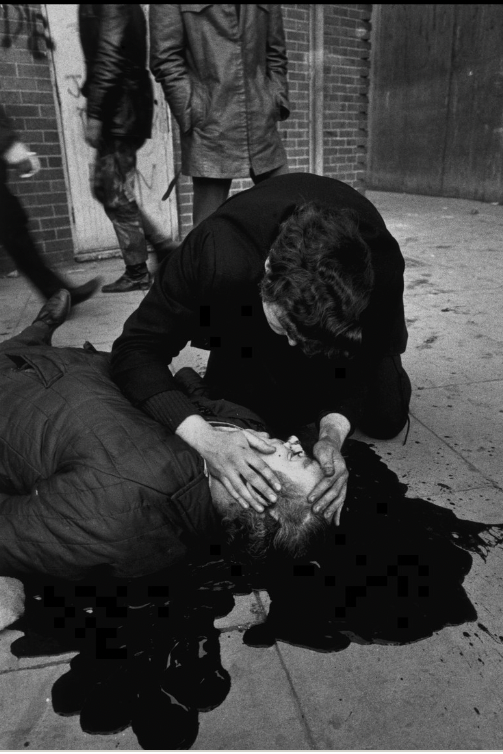
This image shows one of the many dead after the end of Bloody Sunday. Gilles Peress created a large collection on his work from the Troubles titled “Whatever you say, say nothing,” a mantra used by the IRA to warn people against snitching. Peress states that language is incredibly important. It is a cultural identifier and has a different meaning and impact for every community. What is faith and what is peace? For Gilles he ensures that the difference in language in culture between Britain and Northern Ireland is key. He is motivated by Northern Ireland as the first colonial experiment for Britain and in some ways is treated as a study on the human condition in a place that is categorized by violence.
Gilles experience as a photographer is one different from many of the other authors explored due to him being French. As a frenchman he was able to move across borders in a way that is harder to experience for members of other communities. Within Northern Ireland he has the benefit of being a noted outsider.
Gilles remembers having to be both “extremely emotional and rational at the same time.” Witnessing death and violence can be hard to comprehend for any individual but to note the way that Gilles speaks of his time in Northern Ireland is to note the difference in his lack of worry over how he is able to move about a country as a photographer in a violent place.
Image #4: Stanley Matchett (Northern Irish) Bishop Daly waves a blood-stained white handkerchief while men carry away the body of 17-year old Jack Duddy on Bloody Sunday, Derry, 1972
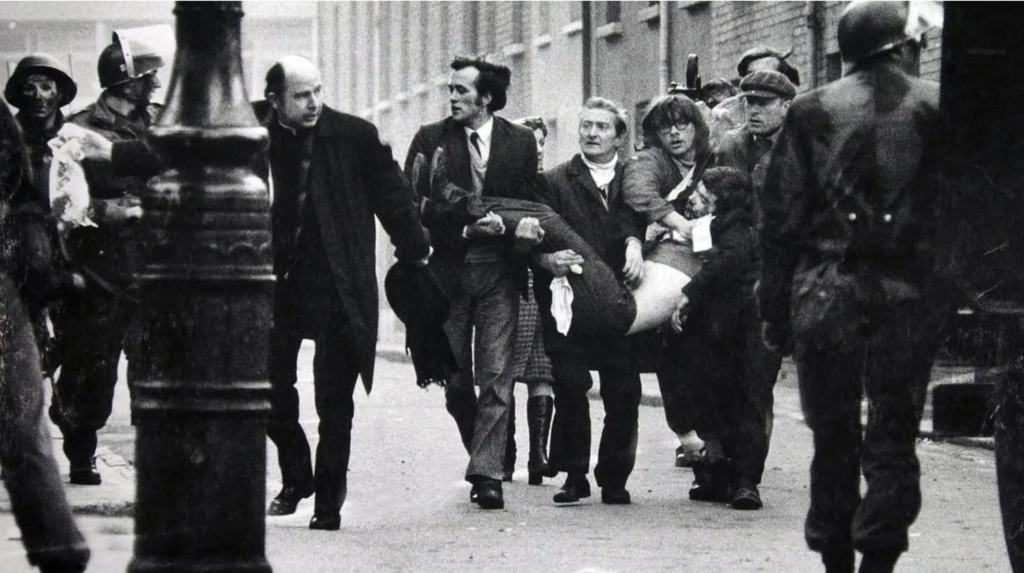
Bloody Sunday is one of the most noteworthy events in the history of The Troubles. Stanley Matchett’s image of Father Edward Daly waving a blood-stained handkerchief over the body of 17-year old Jack Duddy is perhaps one of the best-known images of the massacre. Since the image was released it has been one of many images commemorated as murals in Belfast.
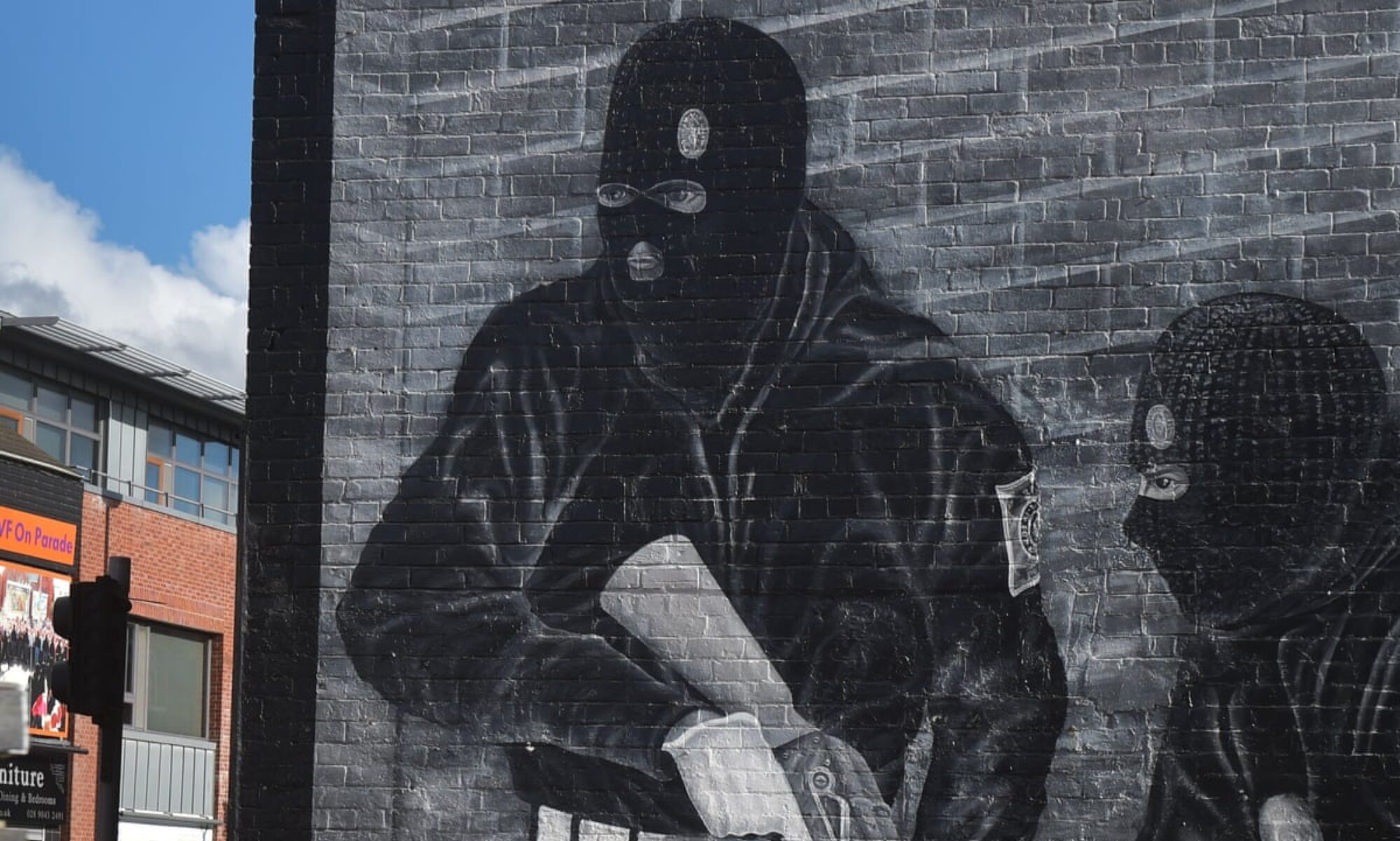
Images like this show the use of photography as propaganda by the nationalist cause. Nationalists such as Martin McGuinness, a former leader in Sinn Féin and the Provisional IRA, were very mindful of the staging and choreography of the images that they released as they understood the importance of photography to the vision of their organization. Trevor Dickson, another Northern Irish photographer, remarked on IRA officials telling members of the press that it would be advantageous for them to be in a certain place at a certain time. Hugh Russell remembered photographing Gerry Conlon, who was wrongly convicted of being an IRA bomber, leaving Old Bailey as a free man. A builder recognized him and brought him to the entrance of the building. The man told Russell to pretend to paint the wall if anyone came by. The importance of photography was an important distinction with loyalists as they were late to the public relations party in terms of use of images to help the cause.
