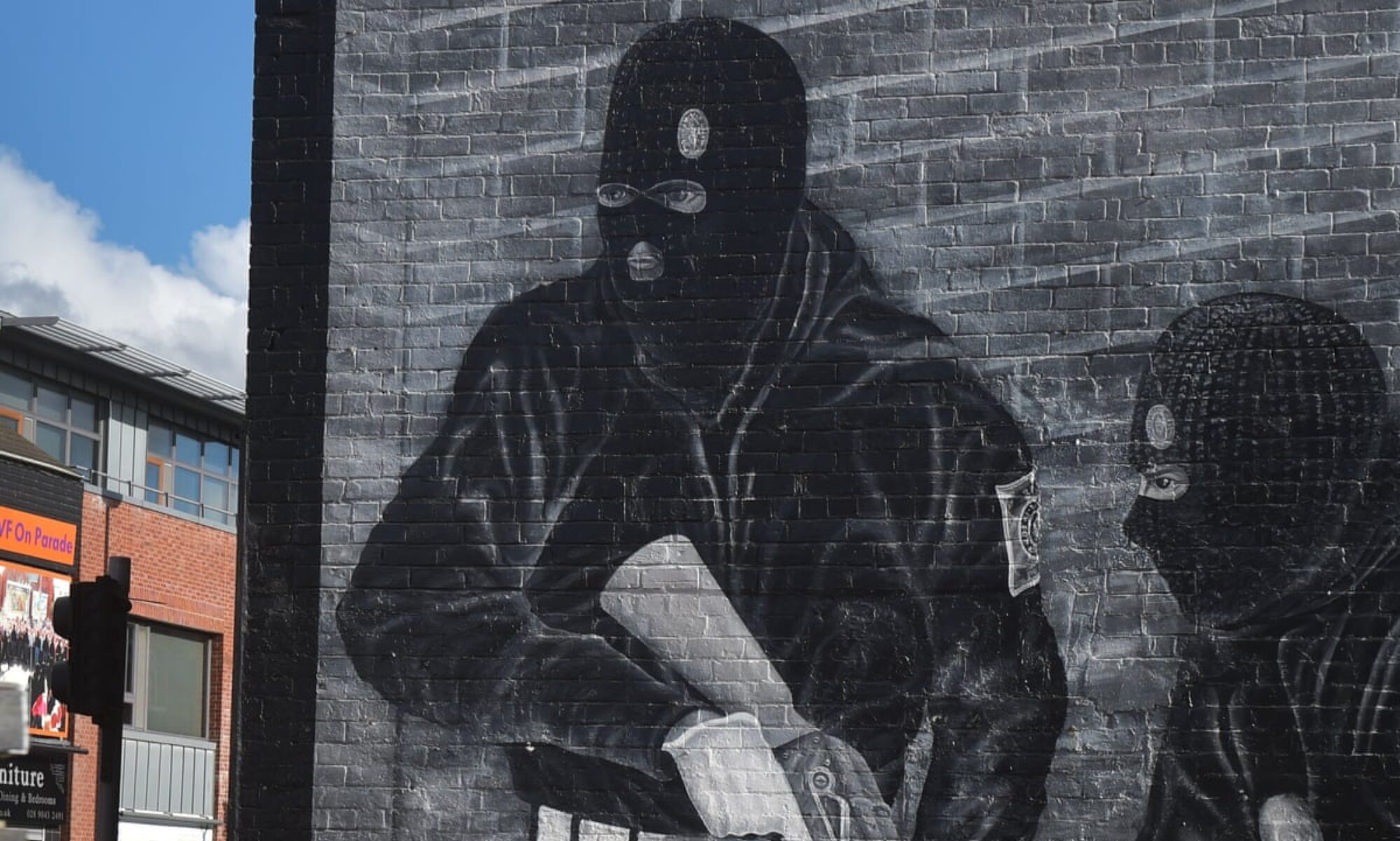

The Genesis of the Disarmament Issues and the Growing Political Divide
Beginning in the mid 1990’s and lasting all the way up until the 2010’s, the decommissioning of paramilitary weaponry in Northern Ireland quickly established itself as one of the central issues prolonging the peace process brought on by the Good Friday Agreement. Fundamentally, the issue centered around trust. More specifically, which political or paramilitary groups had earned it and who simply couldn’t be spared any on account of their failure to adhere to the commitment to disarmament. There are many historical cases which one could point to and claim that they specifically marked at least a symbolic beginning to the decommissioning process. However, it’s accurate to assert that the process became officially set in motion in 1995 when the British and Irish governments established an independent international body geared towards solving the weapons issue (Van Tangen, 1998). This body, duly named the Independent International Commission on Decommissioning was spearheaded by Canadian General John de Chastelain and U.S. Senate Majority Leader George Mitchell, along with assistance from Finnish Brigadier-General Tauno Nieminen (Van Tangen, 1998). Distinguishing himself from his peers, Mitchell played a particularly important role in the peace process, as it relates to decommissioning, due to his drafting of the Mitchell Report – a brief which clearly and explicitly resolved some of the key discrepancies concerning how decommissioning was to be carried out on a cross-party basis (“CAIN: Events: Peace: Report of the International Body on Arms Decommissioning, 22 January 1996,” 2023). Most worthy of note in his report, Mitchell explicitly called on the need for compromise, stating that decommissioning needed to be conducted in tandem with the peace talks in order to end the existing political gridlock between parties (Deane, 2009).
Although significant, Mitchell’s report ultimately did little when it came to quelling sectarian tensions regarding decommissioning; especially with regards to IRA/Sinn Féin and UUP & DUP relations. In fact, by ensuring that both peace negotiations and disarmament would occur in-tandem, the stipulations of his report only created more room for political unrest. Northern Ireland is unique in that it is typically the case for post-conflict societies to go through decommissioning processes either before or after their new governmental institutions are established (Gallaher 2017). Unlike the rest, Northern Ireland undertook the burden of navigating both of these challenges simultaneously. It is precisely this dual-focus that makes way for the construction of the Good Friday Agreement and decommissioning to become ostensibly intertwined aspects of Northern Ireland’s larger bids for peace. Political leaders quickly came to realize the political benefits that would be extended to them by taking hardline stances opposed to the stances their political rivals clung to (Mitchell, 2010). This realization, coupled together with the altogether unspecific guidelines for the decommissioning process put forth by the GFA, opened the door for decommissioning to become one of the easiest methods parties could turn to in order to gain political leverage within the broader context of Northern Ireland (Mitchell, 2010). This, along with the inherent threat of violence that failure to decommission on behalf of paramilitary groups posed, only stirred the pot and ultimately led to a prolonging of the peace process that could have been entirely avoidable (Von Tangen, 1998).
On display throughout the rest of this exhibit will be several artifacts that highlight the overtly fractionalizing role decommissioning played throughout the majority of the talks. The main point of emphasis resting upon the fact that the ambiguity surrounding the decommissioning process served as an area of volatility within the larger realm of post-Troubles Northern Ireland that effectively prolonged the conflict and inadvertently, stratified the political parties engaged to extreme degrees.
