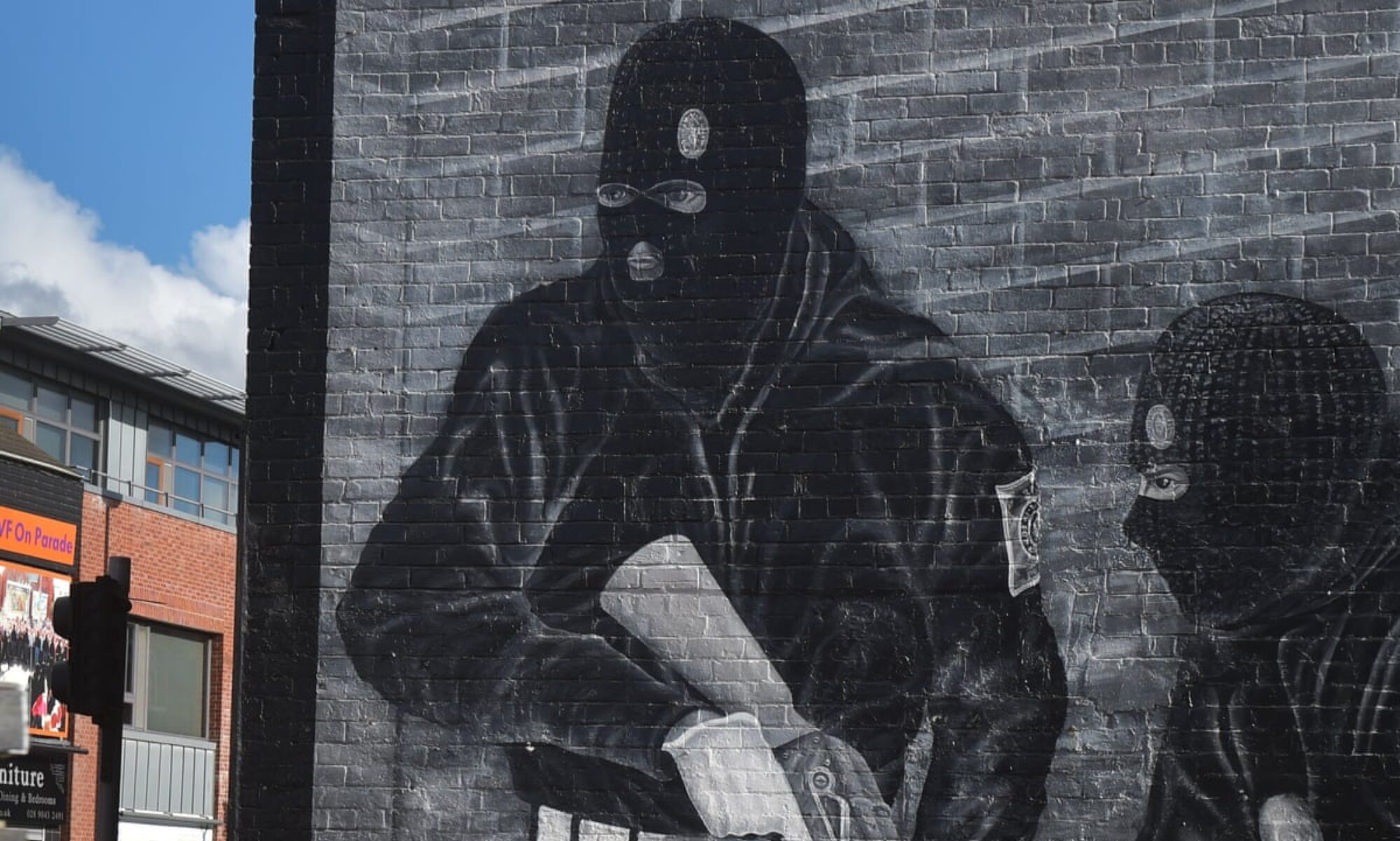
Part 3: The Beginning of the End, Formal Commitment to the Disarmament Process
Video: End in Sight? – Weapons Completely and Verifiably Beyond Use (2001)
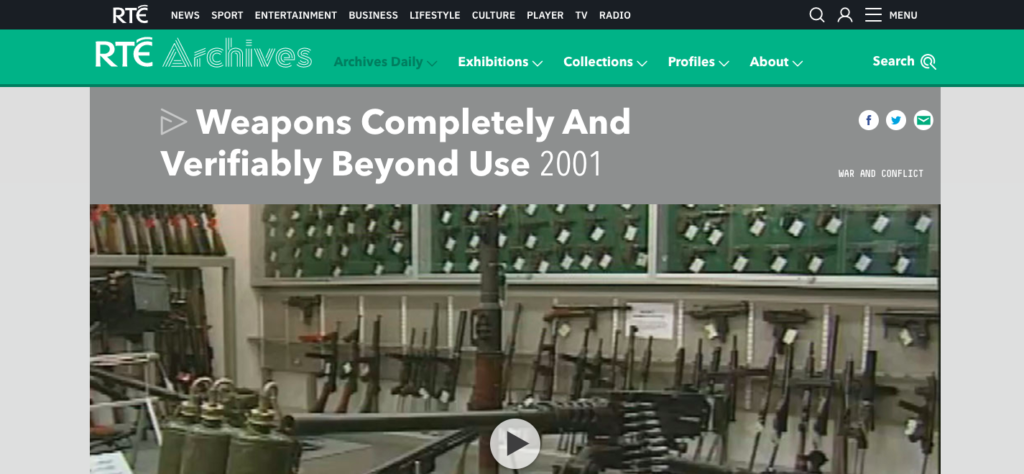
https://www.rte.ie/archives/2016/1020/825528-ira-destroys-weapons/
This clip is part of a broadcast by RTÉ News from October 23, 2001. It recounts a historic moment in the island’s history as it documents the moment the IRA began to adhere to previously agreed upon disarmament terms. For the first time in the country’s history, the IRA publicly allowed international bodies to witness the destruction of their weapons reserves.
In a statement, the IRA and Sinn Féin said that this process was carried out in order to salvage the deteriorating state of diplomatic relations throughout Northern Ireland. By effectively beginning their decommissioning campaign, prospects for the future were now on the rise. As to if the IRA’s provided reasons for beginning disarmament were true or not, there is some speculation as to the entire validity of the matter. Some attest that their rapidly brought about disarmament process was done in response to the September 11th terrorist attacks on the Twin Towers (Mitchell, 2010). The hope being that beginning disarmament would spare them the label of being called a “terrorist” organization, seeing as global hatred towards terror was at an all time high (Mitchell, 2010). Regardless of the reasoning, decommissioning had formerly and properly begun and tensions between political actors throughout the island could finally begin coming to rest.
Article: Loyalist Decommissioning Move Confirmed – A Signal of Peace
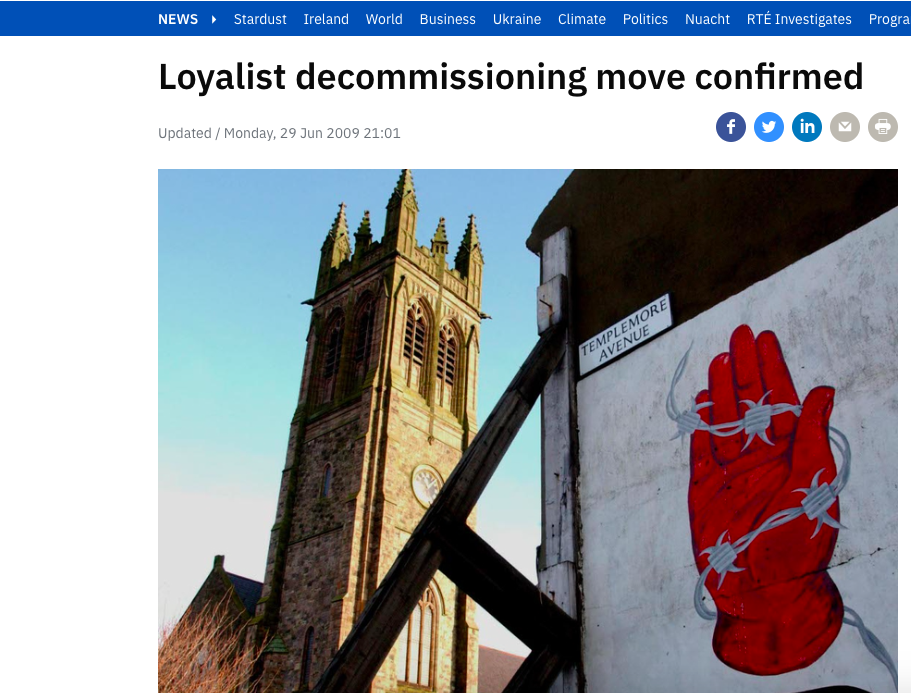
https://www.rte.ie/news/2009/0629/118961-decommissioning/
With the pressure now off the IRA and other Republican paramilitary groups to begin decommissioning, the focus now turned towards the Loyalist side of the matter. Seeing as the main Loyalist argument for why decommissioning of their weapons hadn’t begun yet was that they wouldn’t disarm until the Republicans did, they no longer had any valid substantiating reason to retain their arms (Von Tangen, 1998). This ultimately led to the beginning of their own decommissioning process which was prolonged to almost a decade after the Republicans began decommissioning.
Finally, after nearly two decades of conflict, with both sides of the dispute having now fully engaged with, or at least, started their decommissioning processes, Northern Ireland can begin to consider the high-water mark of the issue to be a thing of the past. What remains now it to reap the benefits of having successfully navigated the decommissioning crisis and the peace process more broadly.
