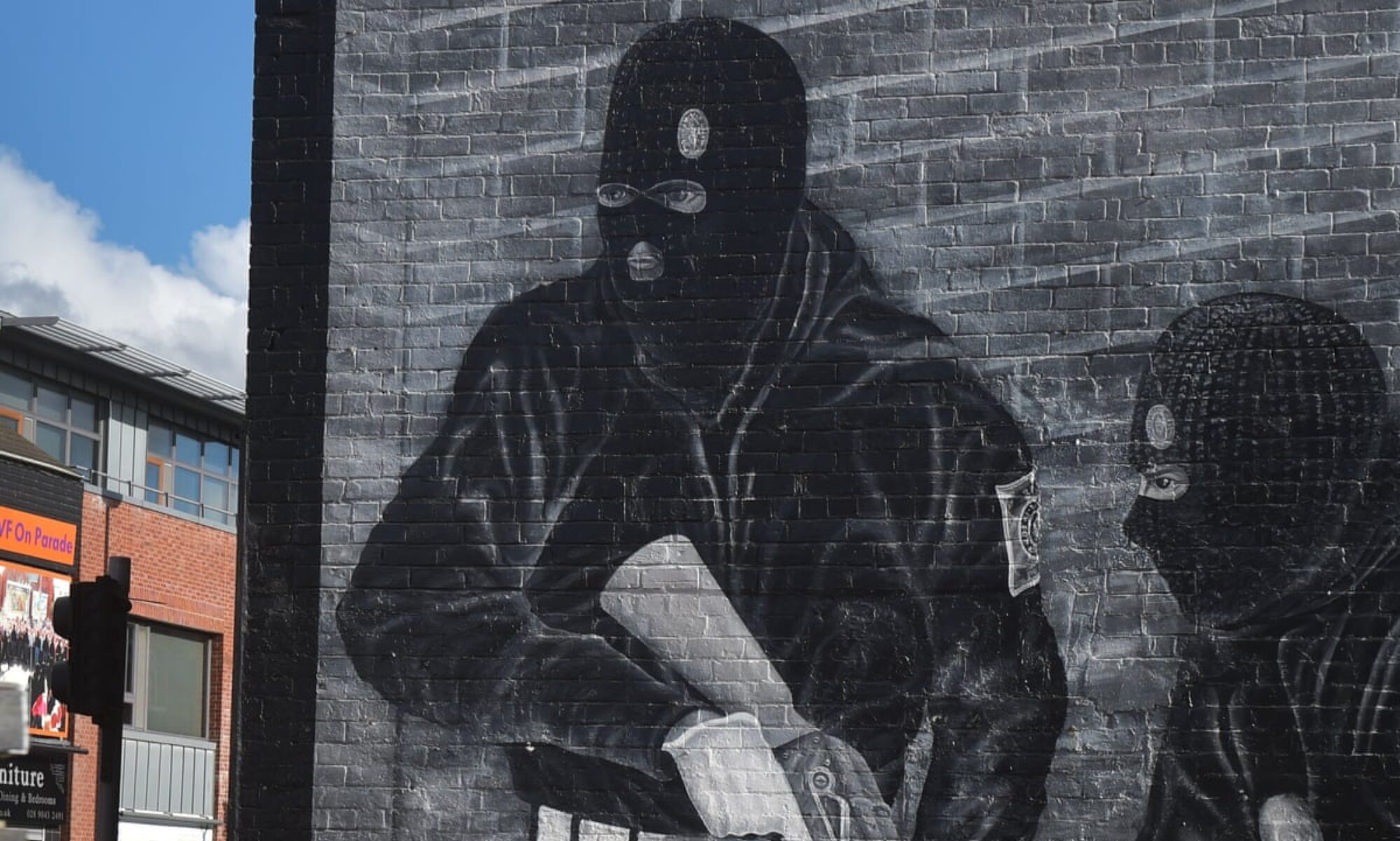
Thus, despite the support for violent action both within Northern Ireland and amongst Irish Americans, the holdups with acquiring weaponry and the lack of progress made through these methods proved to be positive for those pushing constitutional change. Ultimately, the Sinn Fein shift from supporting paramilitary action to peaceful action was also greatly influenced by Irish Americans.
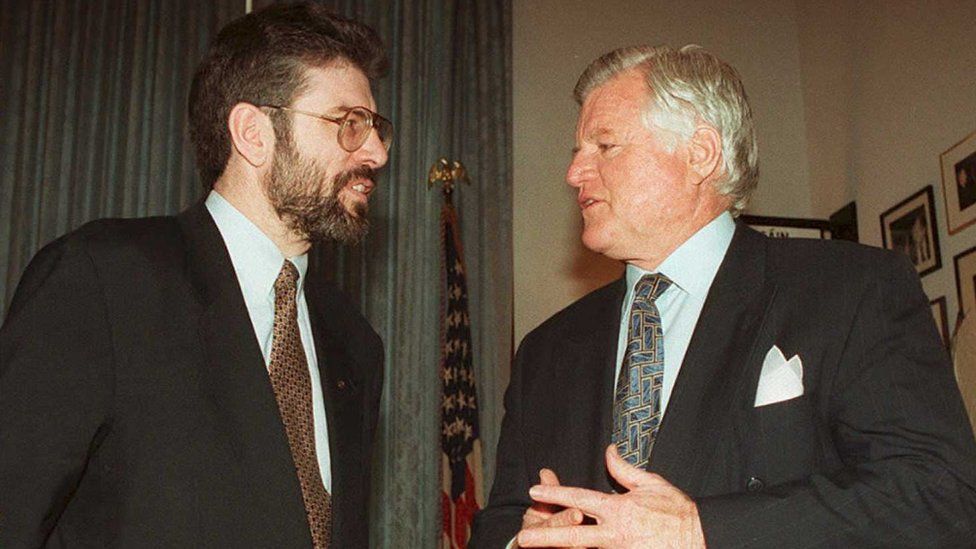
Once again, Ed Kennedy’s relationship with those involved in the conflict proved crucial to the peace process. In addition to his friendship with John Hume and the moderate SDLP, his support for granting Sinn Fein leader Gerry Adams a visa was a major step towards the party’s support of the peace process and decommissioning. The two men are shown in this picture. Gerry Adams himself attests that “Teddy came in and fought all of those battles; the right for me to go and travel, the right to fundraise…” in addition to forming a “connection with the Irish government,” that sometimes “lagged behind on the process” (EMK Institute 2016). In response to second Irish Catholic President Bill Clinton’s qualms about Gerry’s “CV, Teddy said, ‘well, I never told you that he was an altar boy.”
Thus, in addition to his general political support for Irish republicans, Ed Kennedy’s ability to look forward at peace and how it begged a relationship with those promoting violence was critical. Seeing the real people behind the cause, and reaching out a hand, brought Irish American involvement all the way back around. Kennedy did this not just for those directly involved with the conflict, but also for his fellow Irish Americans that he saw so invested.
